
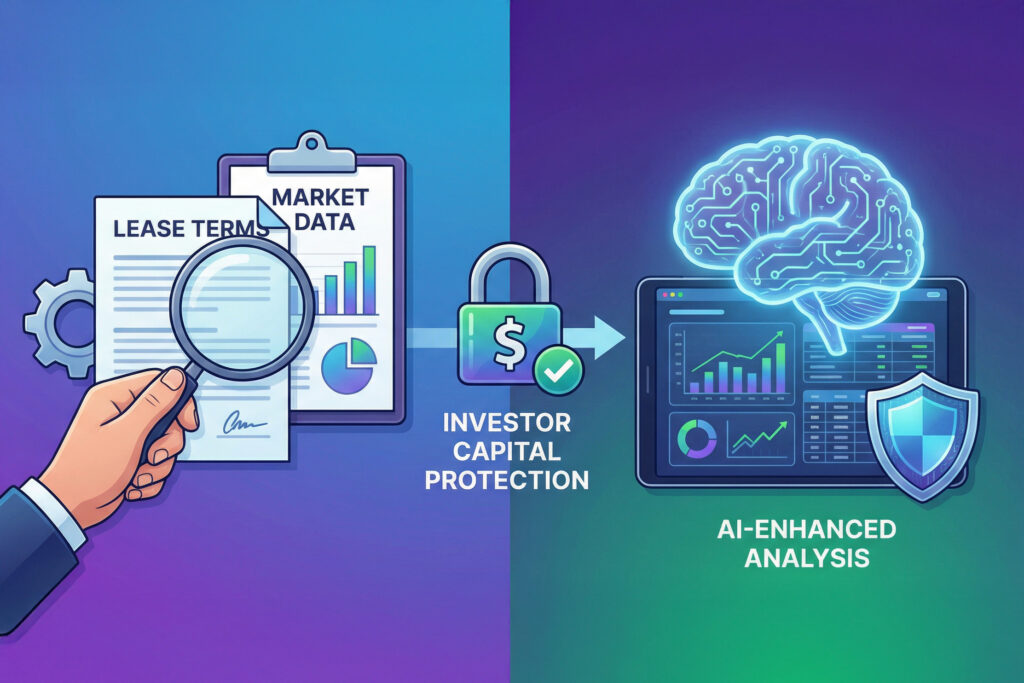
In today’s real estate market, underwriting mistakes are more costly than ever. Small gaps in lease terms, expense assumptions, or market data can materially impact returns, particularly in deals with tighter margins and less room for error. At Tempo, we are integrating AI-enhanced due diligence into our underwriting process to reduce blind spots, enforce discipline, and improve consistency before investor capital is committed.
The objective is straightforward: combine experienced human judgment with technology that helps ensure fewer details are missed and fewer assumptions go unchecked.
What AI-Enhanced Due Diligence Actually Does
Modern AI platforms support Tempo’s underwriting team by rapidly reviewing and cross-checking large volumes of data that would otherwise require extensive manual effort. This includes leases, rent rolls, historical financials, third-party reports, and market data, processed in minutes rather than days.
In practice, these tools help identify common underwriting failure points, such as:
- Lease terms that do not align with the rent roll or pro forma assumptions
- Missing or incomplete due diligence items that can later create legal or operational issues
- Expense anomalies, occupancy inconsistencies, or tenant concentrations that warrant deeper review
AI systems can also aggregate external data—zoning, demographics, environmental factors, crime statistics, and comparable sales or rents—to provide a more complete and standardized view of each property’s risk and return profile. This creates a stronger baseline analysis before the investment team applies its own assumptions and judgment.
Importantly, AI does not replace underwriting work; it helps ensure that the foundational inputs are accurate, complete, and internally consistent.
How This Impacts Tempo Investors
For Tempo investors, the immediate impact is a higher bar for deals that advance through screening and into funds or syndications. AI-assisted checklists and comparisons help ensure that financial, legal, physical, and market diligence is actually completed.
By compressing the time required to evaluate each opportunity, Tempo can review more deals while remaining selective. This allows the team to move efficiently when attractive opportunities arise without lowering underwriting standards. The result is capital being allocated to a smaller set of opportunities that clear both quantitative and qualitative hurdles.
Over time, this process is designed to reduce the likelihood of post-closing surprises and improve consistency across the portfolio, particularly as market conditions change.
Keeping Humans Firmly in Control
AI is a tool, not a decision-maker. Tempo’s underwriting team, investment committee, and sponsor relationships remain central to every invest-or-pass decision. Human judgment still governs leverage decisions, capital structure, downside scenarios, sponsor evaluation, and alignment with Tempo’s overall risk philosophy.
From an investor perspective, this “human-in-the-loop” approach means technology is used to strengthen the inputs—better data, faster comparisons, earlier identification of red flags—while final decisions remain grounded in experience and fiduciary responsibility.
This combination of technology and judgment supports Tempo’s core objective for investors: prioritize capital preservation first, while pursuing well-underwritten opportunities for income and long-term growth.
Please Contact Us if you have any questions.
